
Last updated November 15, 2026
 Sweep & inspection
 Caps & crowns
 Flue relining
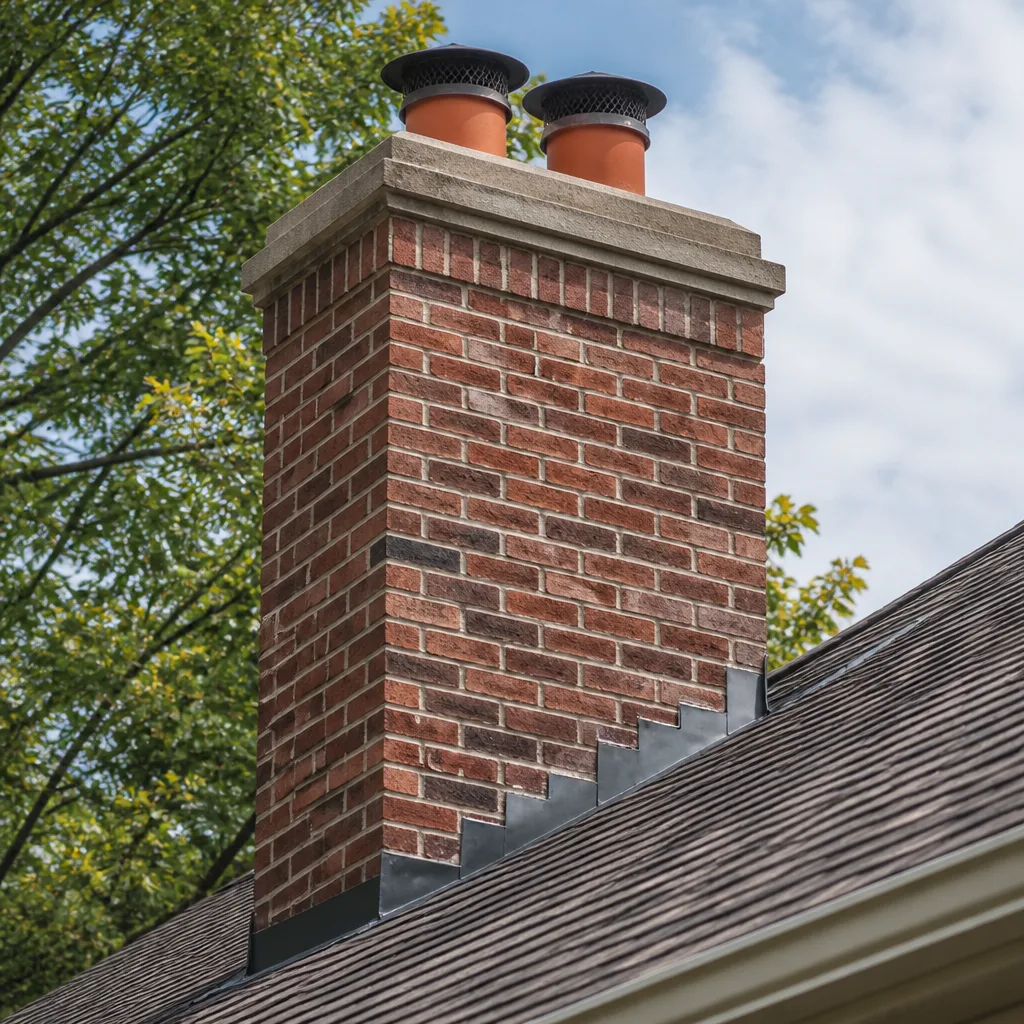 Masonry repair
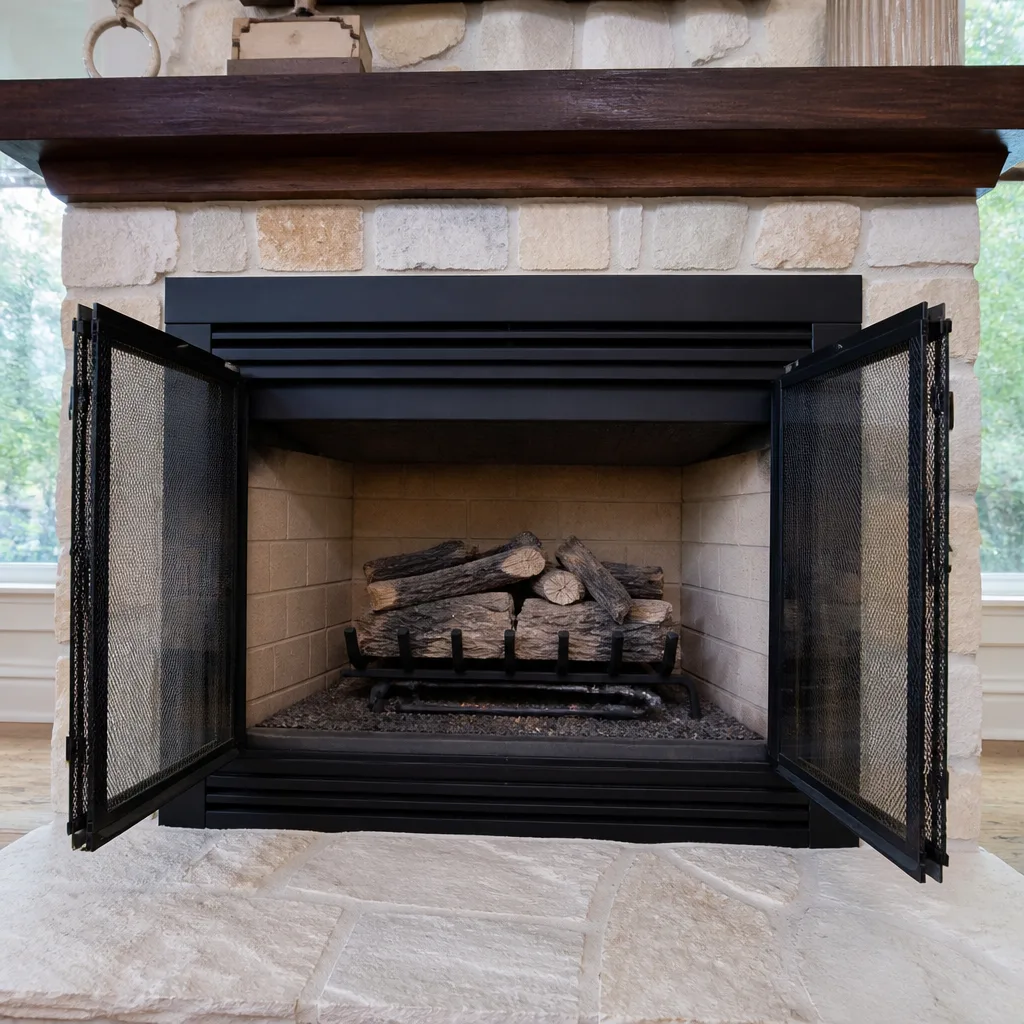 Gas fireplace service
Level 1 sweep and inspection to the NFPA 211 annual standard - flue, crown, cap, and flashing checked and photographed
Chimney sweep logs do not sweep chimneys. They loosen some creosote - which then falls where a brush and vacuum still have to collect it.
Choosing the Right Chimney Cleaning Brand: A Buyer’s Guide for Roseville
Two brush sets can both be sold as “chimney cleaning equipment” and still be worlds apart. One is a homeowner-grade poly brush that flexes and smears glazed creosote around the flue; the other is a professional rotary system built to cut through Stage 2 deposits without chewing up the clay tiles underneath. The brand names on the tools and materials a sweep uses tell you which side of that line they work on. This guide explains what those names mean, which products matter for a Roseville home, and how to ask a sweep what they stock so you can judge the answer. You’ll finish knowing how to tell a specialist from a generalist before anyone climbs on your roof.
Quick Answer
The right chimney cleaning brand isn’t one logo – it’s a set of certified, professional-grade products matched to the job. For most Roseville homes that means poly brushes and rotary systems rated for your flue type, a recognized creosote treatment used at the right stage, an elastomeric crown sealant built for dry summer heat and wet winters, and a stainless cap from a known manufacturer. A sweep who can name the brands they use, and explain why, is buying for the trade rather than for the hardware-store shelf.
Styles & brands we work with
- Sweep & inspection
- Caps & crowns
- Flue relining
- Masonry repair
- Gas fireplace service
Table of Contents
- Consumer Brushes vs. Professional Brushes
- Creosote Removal Products and How They Work
- Crown and Mortar Sealants That Hold Up
- Chimney Caps: Why Gauge and Material Matter
- Liner Systems: DuraFlex, HeatShield, and When Each Fits
- How to Ask a Sweep What Products They Use
- What “Cheap” Actually Costs You
- Common Mistakes to Avoid
- When to Call a Professional
- Frequently Asked Questions
- The Bottom Line
See the difference
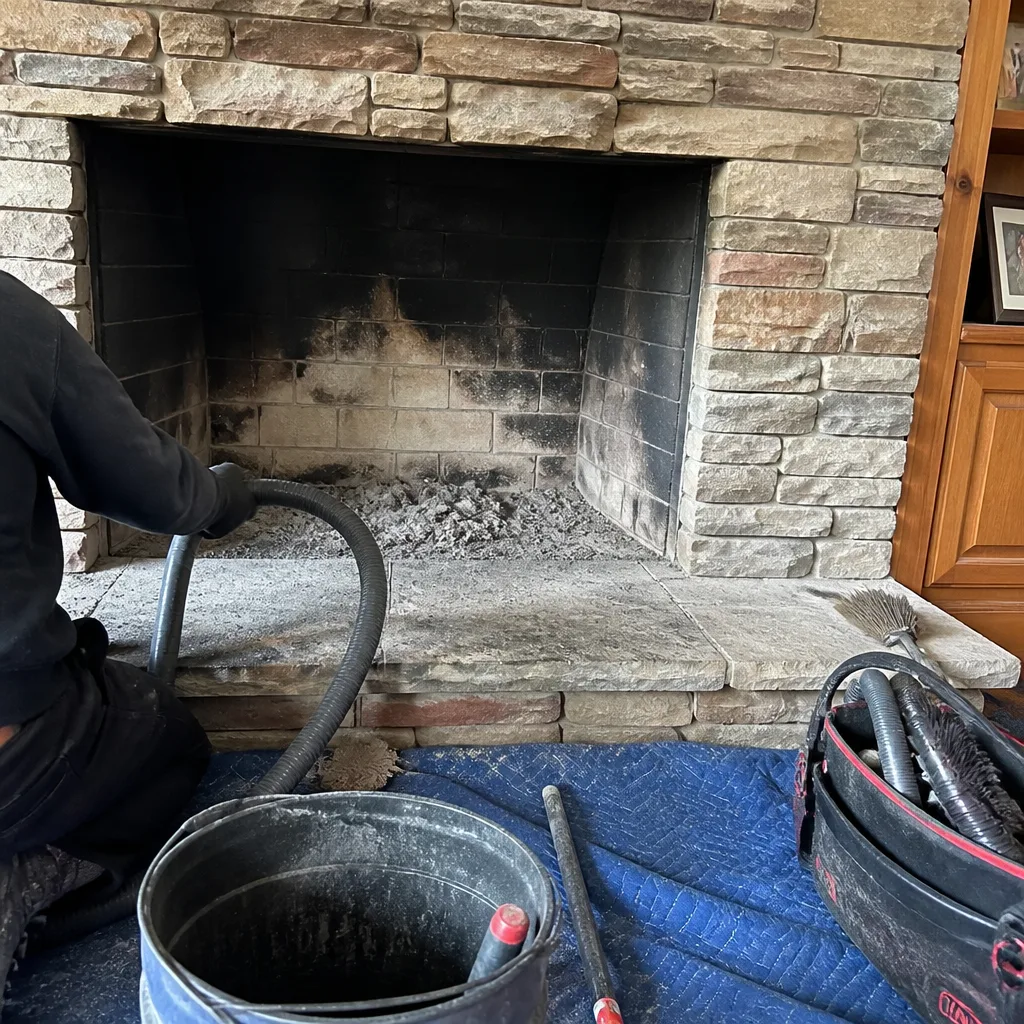 Before
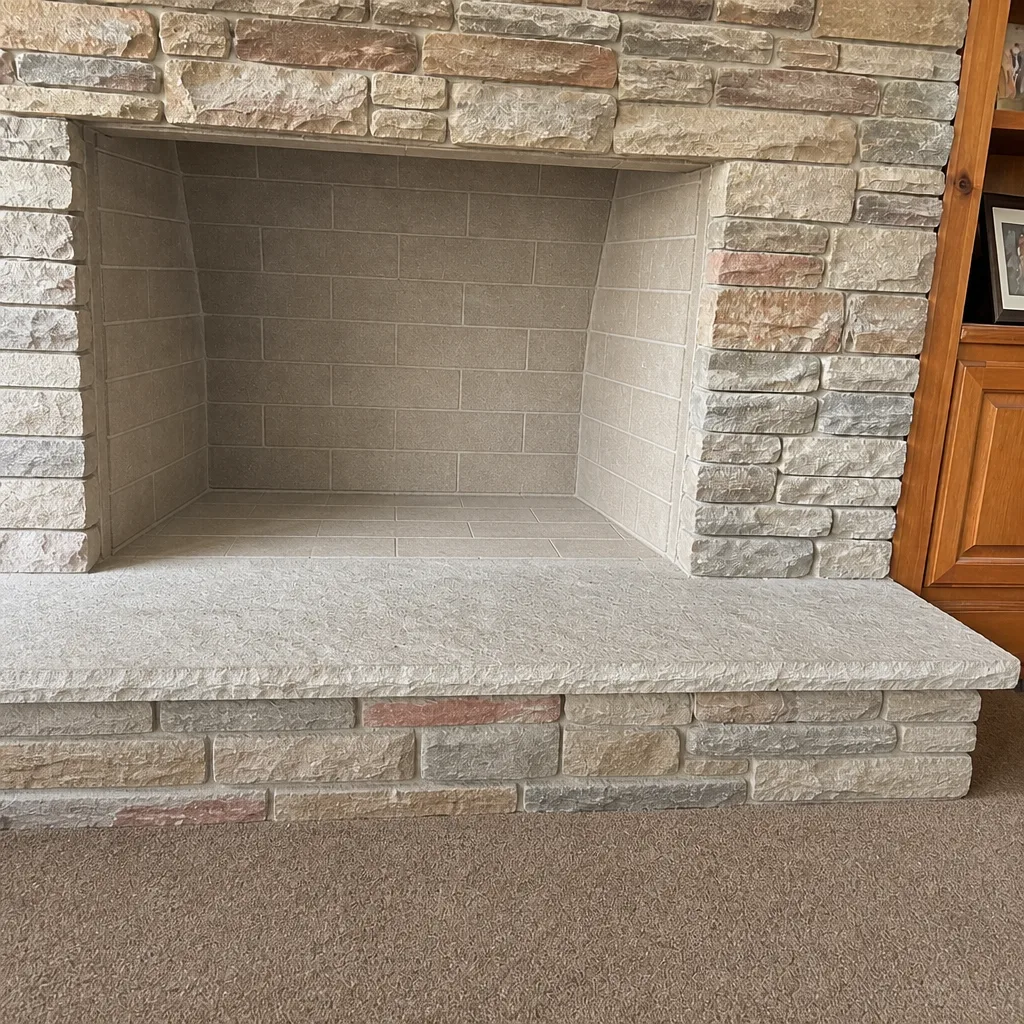 After
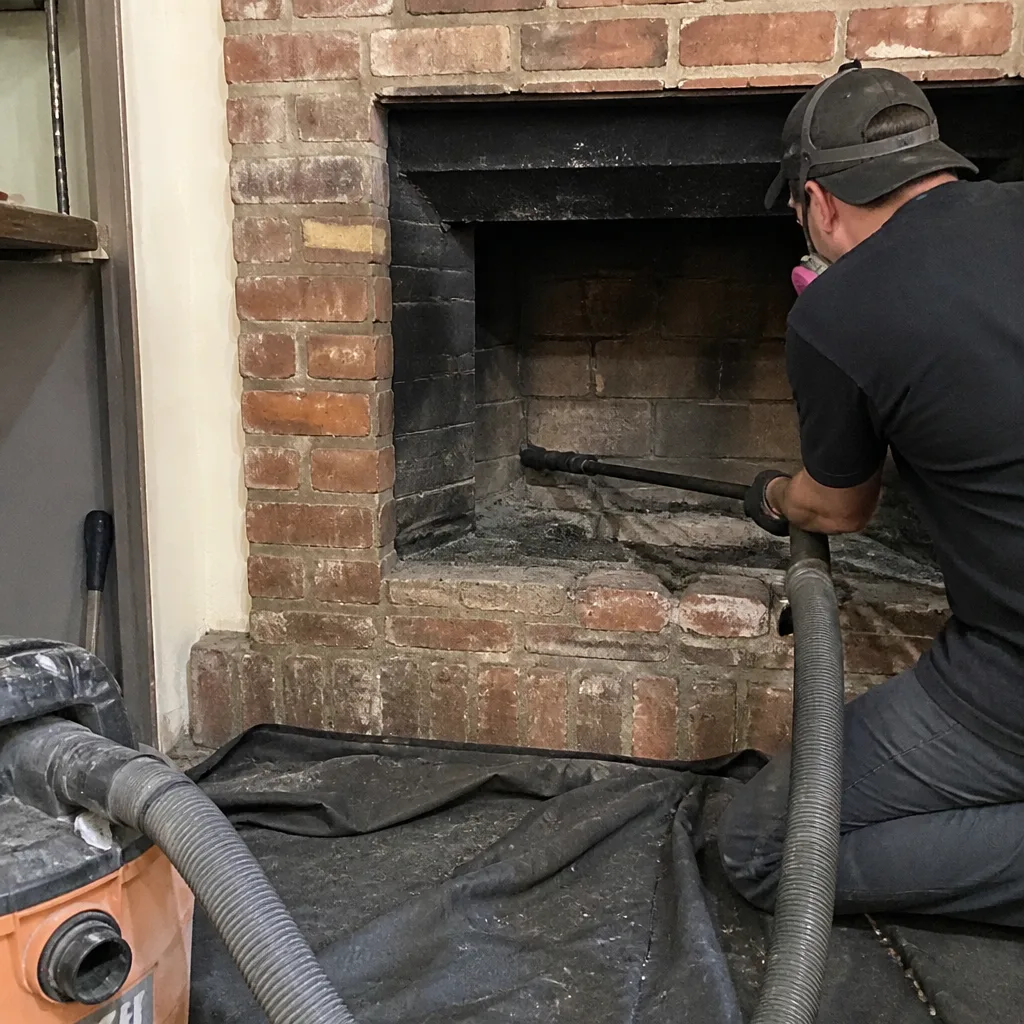 Before
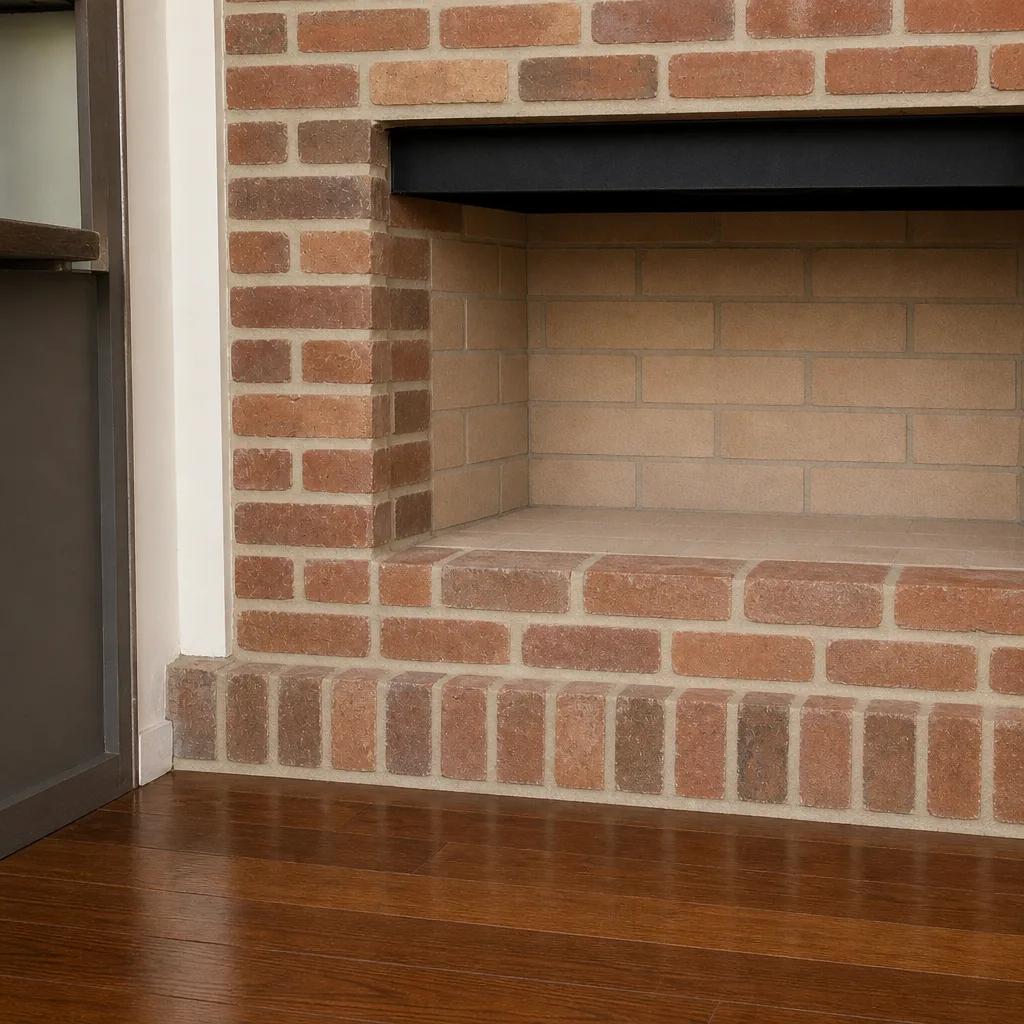 After
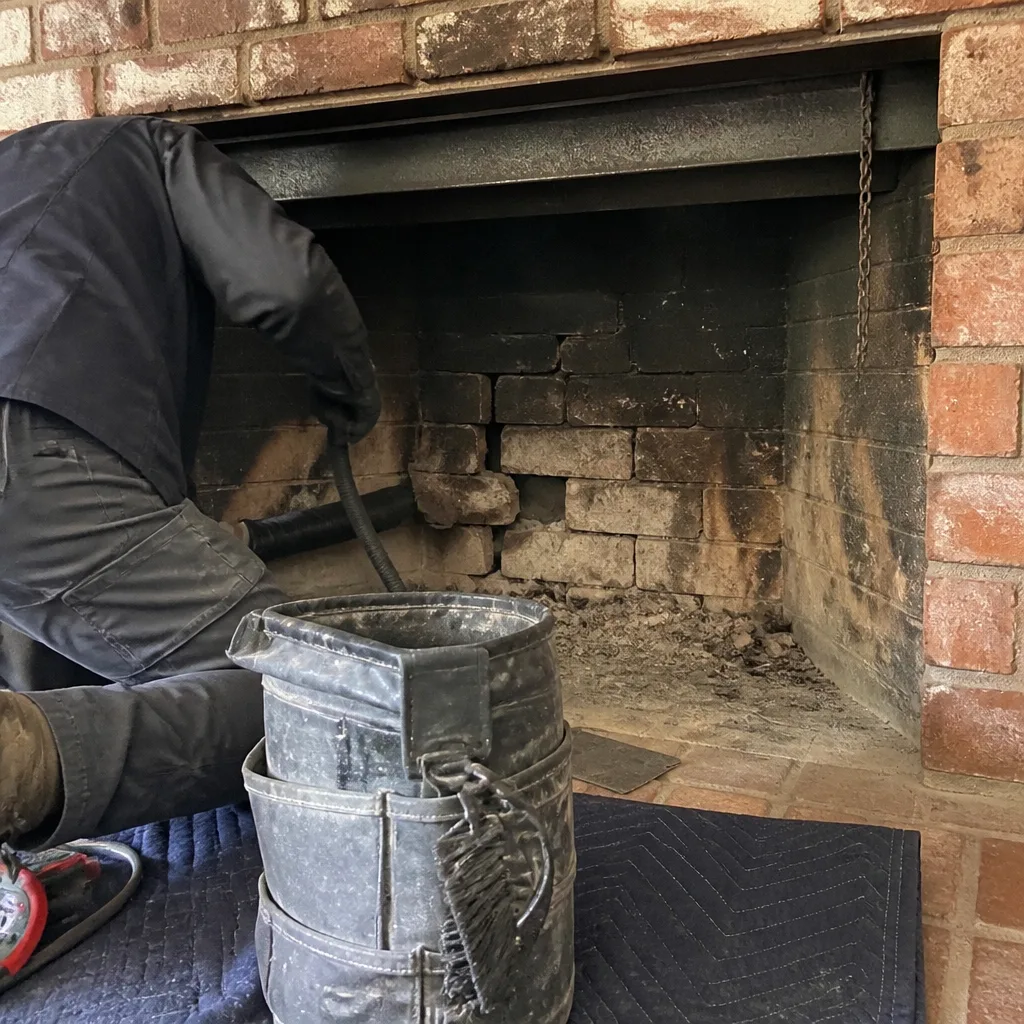 Before
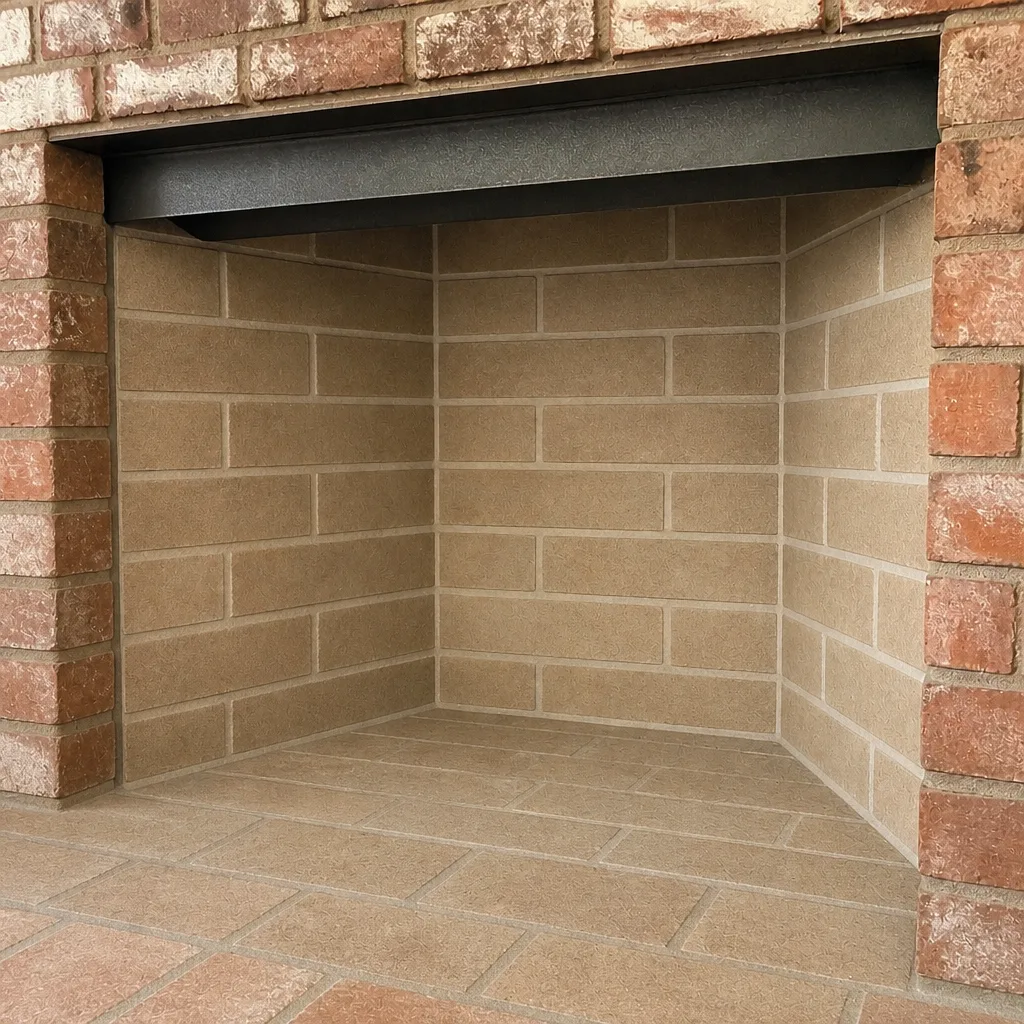 After
The Two Worlds of Chimney Cleaning Products
A chimney sweep’s toolkit is a good proxy for how they think about the work. On one side you have mass-market brush kits sold to homeowners for occasional use. On the other you have the rotary cleaning systems, purpose-built brushes, and chemically engineered treatments that professional sweeps invest in because a flue is unforgiving. Both get marketed under the same words. Only one is designed to remove heavy creosote from a flue without scarring the liner.
The difference matters most in older Roseville housing stock, where original clay tile liners are common and already carrying years of use. Soft deposits come off with almost anything. Glazed, hardened creosote is a different problem, and it’s where cheap equipment fails quietly. A stiff wire brush on a weak rod can chip tile; a soft brush glides over the glaze and leaves it. We’ve seen flues where the surface looked clean and the dangerous layer was untouched. So when you’re comparing chimney sweeps in Roseville, the product question isn’t trivia. It tells you whether the person on your roof is equipped to handle what’s actually inside the chimney.
Consumer Brushes vs. Professional Brushes
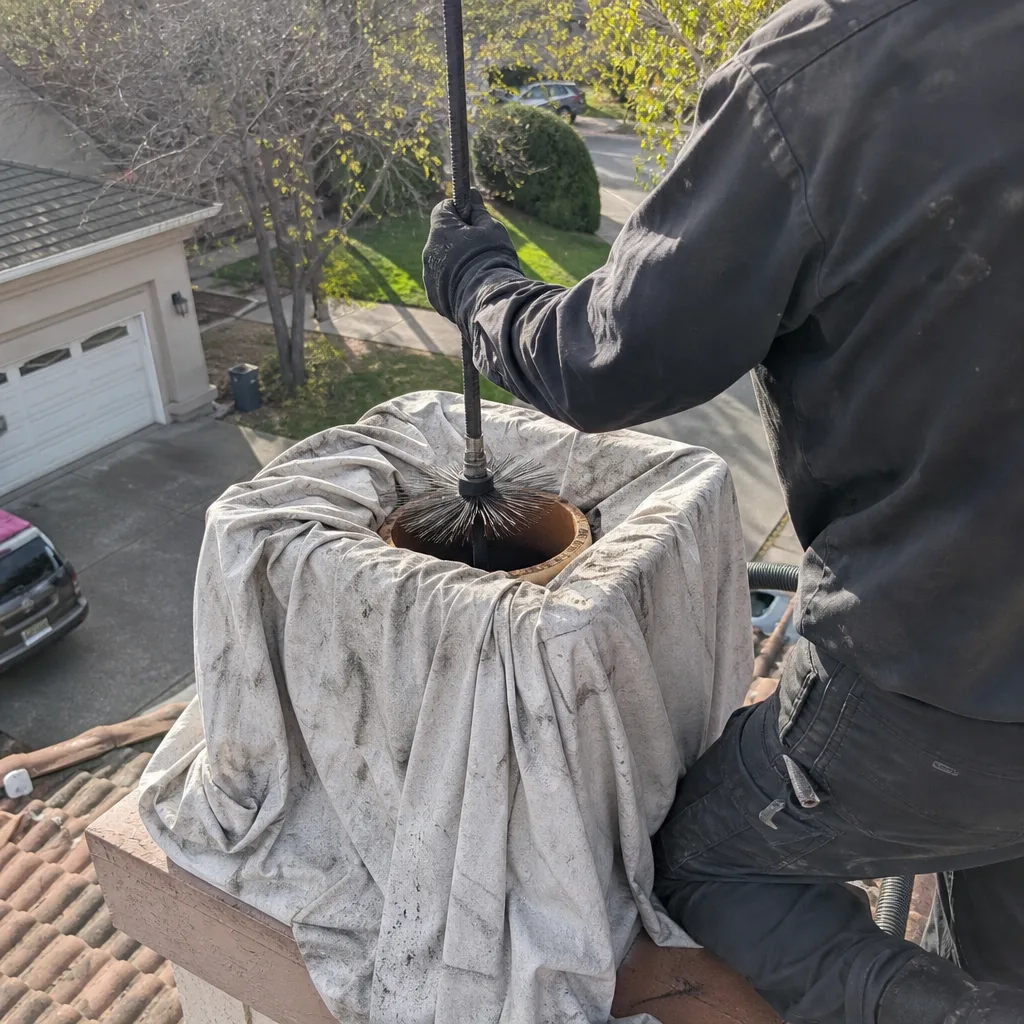
The single biggest equipment divide is the brush itself. A consumer brush set is usually one flexible poly brush on a short rod. A professional kit includes multiple brush heads, different bristle materials, weighted whips, and a rotary motor that spins the brush against the flue wall rather than dragging it. Each choice of bristle and wire matters for a specific job.
Poly vs. Steel Brushes
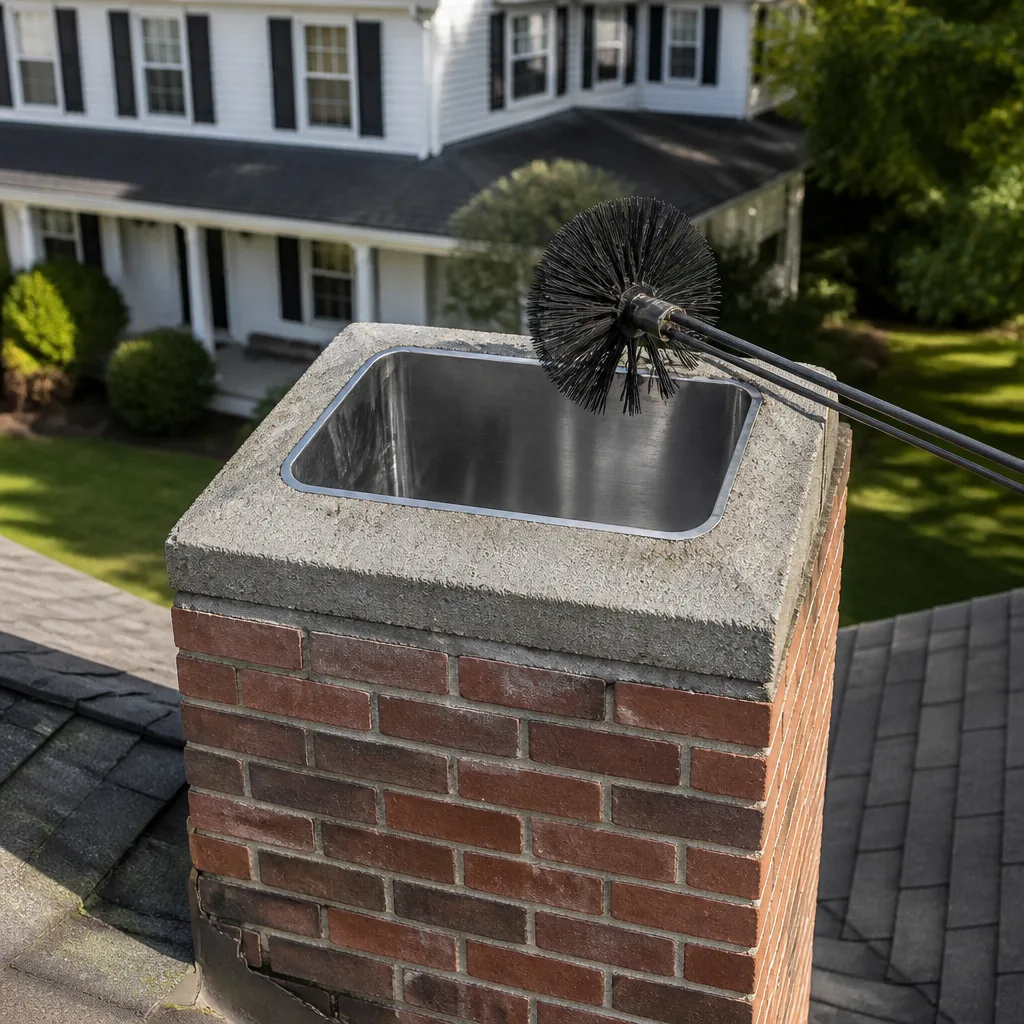
- Poly brushes are the standard for routine sweeping of clay tile and stainless liners. The bristles are stiff enough to knock down soot and soft creosote but won’t gouge the flue surface. They’re also safe on the flue of a stainless flexible liner, which a steel brush can scratch.
- Steel brushes are used on heavier deposits and on masonry flues that can handle the aggression. Wire gauge is the split point: thicker gauge cuts faster, thinner gauge fits tighter flues. A professional carries several sizes, not one.
- Rotary whips and chains are the tools that tackle Stage 3 glazed creosote. These spin at speed and require training and control. A homeowner with a hand brush cannot reproduce that.
A flue with glazed deposits needs a rotary system plus a chemical treatment, not a stiffer hand brush. If your sweep only shows up with one poly brush on a stick, they’re set up for light cleaning and nothing else. That may be all your chimney needs this year, but the person should own the tools to know the difference. Our technicians have up to 9 years of experience, and matching the brush to the deposit is the first decision on any job.
Creosote Removal Products and How They Work
Creosote comes in stages, and each stage needs a different response. Stage 1 is light soot and flaky deposit that sweeps off easily. Stage 2 is a hardened, crusty layer that resists a plain brush. Stage 3 is glazed and tar-like, and it’s the stage that fuels chimney fires. Products sold as creosote removers are designed to change the chemistry of the deposit so a sweep can remove it – not to substitute for sweeping.
What ACS and Similar Treatments Do
Anti-Creo-Soot (ACS) and comparable additives are formulated to loosen and modify creosote so it can be brushed away in a later sweep. They don’t erase creosote on their own, and they don’t clean the flue. Timing is the part most homeowners get wrong. A treatment applied too close to the sweep does nothing useful; applied too early and your fire simply burns it off without the deposit being affected. The right sequence is to have a sweep assess the deposit first, apply the treatment, let it work on the recommended schedule, then sweep.
What These Products Can’t Do
- They can’t replace mechanical sweeping – the brush still has to remove what the chemical loosened.
- They can’t fix a warped or cracked liner; a damaged flue needs repair, not a treatment.
- They can’t make a chimney safe on their own; only a full inspection and cleaning confirm that.
Using a treatment as a shortcut is one of the quiet ways people postpone real work. If a sweep sells you a creosote treatment without a pending cleaning or a plan, ask why. The product and the sweep have to be scheduled together to do anything.
Crown and Mortar Sealants That Hold Up
The crown and mortar joints on a Roseville chimney face a specific challenge: long dry summers that bake and shrink masonry, then wet winters that push water into every crack. Standard caulk fails here. It cures hard, cracks at the edges, and lets water in within a season or two. Professional-grade sealants are elastomeric – they flex with the movement of the masonry rather than cracking against it.
Elastomeric vs. Standard Caulk
- Elastomeric sealants stretch and recover with temperature swings, so a joint that moves doesn’t tear the seal. They’re made to bond to mortar and masonry and stay bonded.
- Standard caulk is designed for trim and interior gaps. On a chimney crown, it cracks, peels, and leaves the same water path it was supposed to block.
- Crown repair materials are a category of their own: a proper crown is rebuilt or resealed with a masonry-grade product, not smeared with a tube of caulk.
Water is the most common cause of slow chimney damage in Roseville, and the crown is the first line of defense. When a sweep quotes a crown repair, ask what product goes on it. Elastomeric sealants, masonry-grade repair mortars, and manufacturer-specified coatings are what a professional uses. Gelco is one brand name that shows up in this category, and it’s a reasonable marker that the sweep is buying material rated for the job, not the aisle at the hardware store.
Chimney Caps: Why Gauge and Material Matter
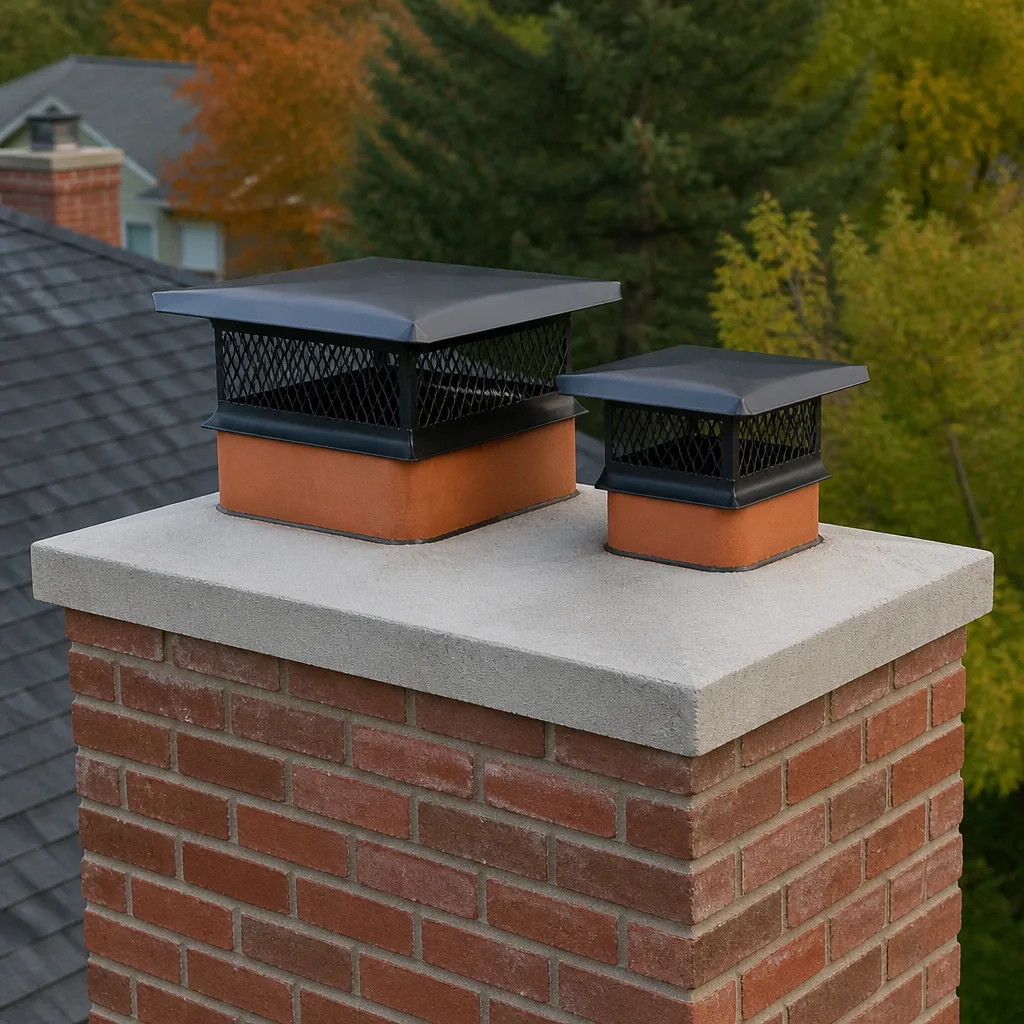
A chimney cap does more work than it gets credit for. It keeps rain out of the flue, stops animals from nesting, and keeps sparks off the roof. The cap’s material determines how long it lasts under Roseville’s summer sun. Galvanized caps sold at big-box stores are a thin coating over steel; once that coating weathers, rust starts. Stainless caps at 20-gauge or heavier are built to sit on a roof for years without failing.
What Separates a Good Cap
- Material: 20-gauge or heavier stainless steel resists heat, moisture, and UV far better than galvanized steel or thin aluminum.
- Construction: Welded seams and a heavy-duty mounting bracket hold up. Crimped seams and flimsy legs vibrate loose.
- Fit: A cap sized to the actual flue opening with a proper spark screen closes the gap animals use, without choking draft.
The heat side matters too. Roseville’s long hot summers put the roof through repeated expansion and contraction, and a light cap fatigues faster under that cycle. A stainless cap from a manufacturer like Olympia Chimney or Copperfield is a different product from a stamped galvanized unit. Both are called chimney caps. Only one is likely still on your chimney in five years.
What Do Liner Products Like DuraFlex and HeatShield Actually Do?
A chimney liner contains the fire, channels combustion gases up and out, and protects the surrounding masonry. When a liner is damaged, there are two paths: restore the existing flue surface or install a new liner. The products used for each are distinct, and knowing the names helps you understand a repair quote.
HeatShield for Flue Restoration
HeatShield is a ceramic flue resurfacing system used to rebuild and restore a deteriorated clay liner from the inside. It’s a recognized product in the chimney trade and one that general contractors typically don’t carry or know how to apply. When the flue cracks are minor to moderate and the original structure is sound, resurfacing can restore a safe flue without removing the tile. It’s a specialist repair, and it’s the kind of product that signals the sweep is doing liner work at a professional level.
DuraFlex for Full Relining
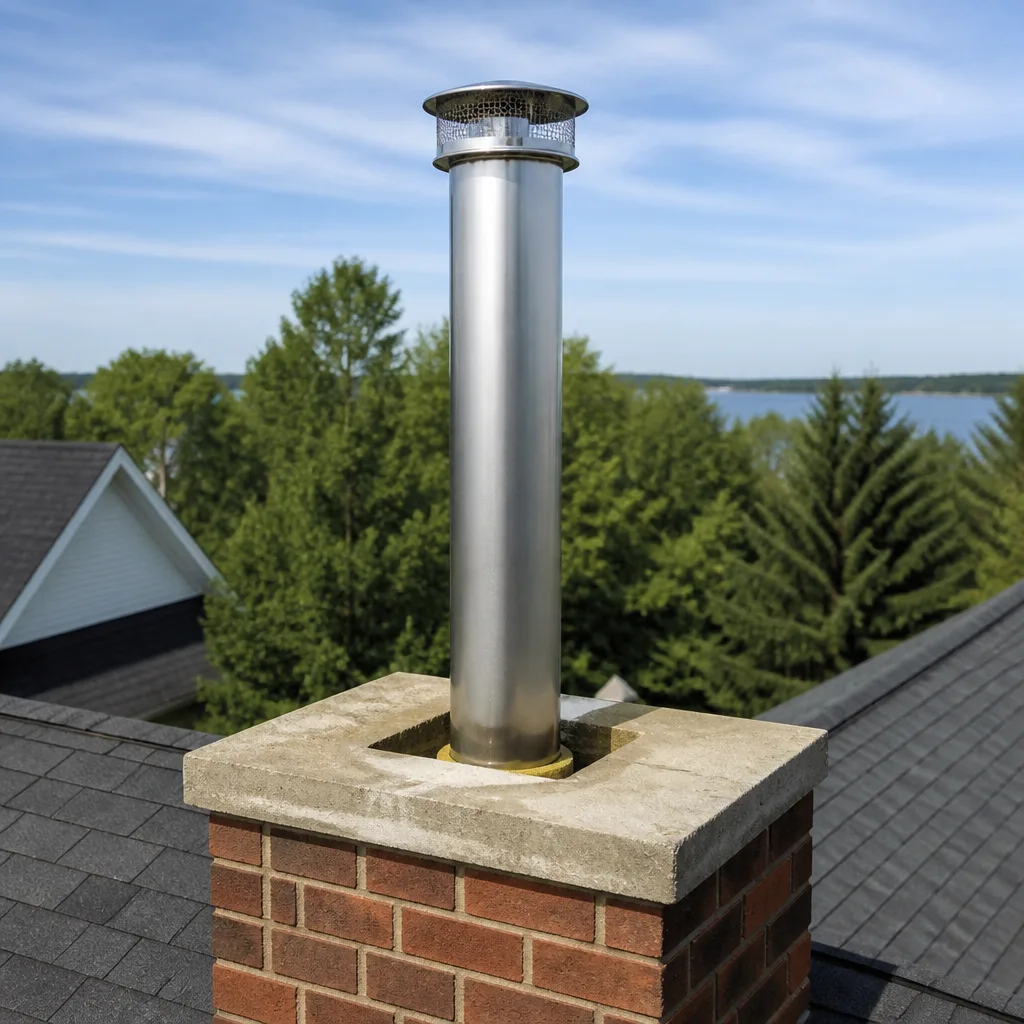
When the existing flue is beyond restoration, a flexible stainless liner is the standard route. DuraFlex is a brand of flexible liner system specified by name in professional relining work. The liner has to be sized to the appliance, properly insulated, and correctly connected at top and bottom. That’s a different job from sweeping, and it’s a reason to check that your sweep’s scope includes real repair work, not just cleaning followed by a list of things for someone else to fix.
If a quote names a specific liner or resurfacing product, ask how the sweep chose it. A specialist will explain why HeatShield suits your flue, or why DuraFlex is the right replacement for the damaged section. That answer tells you a lot. You can read more about our approach on the Chimney Sweep Roseville home page.
How to Ask a Sweep What Products They Use
The easiest quality filter is a direct question, asked before the appointment. The wording matters, because sweeping the general question “what do you use?” gets you a vague answer. Ask specifics and listen for whether the answer names products.
Questions to Ask Before You Book
- What brush system do you use, and what type of flue is it rated for?
- Do you use a rotary cleaning system for heavy creosote?
- What creosote treatment do you stock, and when do you apply it?
- What brand of liner do you install, and is it insulated?
- Do you resurface flues, or only replace them?
- What sealant and cap brands do you use for crown and cap work?
Now consider what a good answer sounds like. A specialist names DuraFlex, HeatShield, Olympia Chimney, or Copperfield without prompting and explains why each fits a particular job. A generalist says “we use professional materials” and leaves it there. The brands a sweep stocks reveal how seriously they treat the trade. If the sweep works on chimneys and nothing else, the products are likely selected for chimney conditions, not borrowed from a plumbing or roofing catalog.
What Their Answer Tells You
A sweep who answers these questions with specific brands has invested in the work. That’s not proof on its own, but it’s a strong signal, especially paired with a camera inspection. We’d rather have a homeowner ask us to explain a product than wonder whether it matters. Chimney work is all we do, so the products are chosen for that work.
When you want the source of the brands in this guide, the Roseville city page explains how we apply them locally.
What “Cheap” Actually Costs You
Low-cost chimney cleaning is a common entry point, and homeowners often start with the lowest bid. That math is shortsighted for a specific reason: a cheap sweep still has to do the job safely, and the pressure is to save on tools and time instead of on quality. What that looks like in practice is a light brush pass, a quick glance up the flue, and no camera. The deposit stays on the liner.
There’s also the follow-up pattern. A generalist cleaning crew may sweep well enough but can’t repair the problem they find. You get a list of things they noticed – a cracked crown, a failed cap – and then you’re calling a second company to quote the fix, at a second cost. The full chimney service chain under one roof is the practical answer: inspect, clean, and repair as one sequence, with the same company seeing what they quoted.
The costs that matter are hard to see from a quote. A damaged liner lets combustion gases move through the masonry. A flue with unremoved glazed creosote carries fire risk. A failed cap lets water in, which damages the crown and eventually the structure. You can’t see any of it from the ground, and a cheap sweep may not show you. A professional sweep uses a camera and can prove the finding. That’s the standard worth paying for, whatever the invoice says.
Common Mistakes to Avoid
- Hiring on price alone. A below-average sweep is still sending someone onto your roof; the quote you compare should include the inspection and cleaning scope, not just the “sweep” line item. Ask what’s included before you decide.
- Accepting a creosote treatment without sweeping. Additives loosen deposits so a brush can remove them; they don’t replace the sweep. If a treatment is sold without a cleaning plan, that’s a red flag.
- Skipping the camera inspection. The chimney is a shaft you can’t see into from the room. A sweep should be able to show you what’s inside, not just tell you. We’ve seen plenty of “clean” flues with real problems above the smoke shelf.
- Replacing a cap with a hardware-store unit. A galvanized cap under Roseville’s summer heat may rust well before it needs to. A 20-gauge stainless cap from a known manufacturer is designed to last.
- Assuming a caulk-tube crown repair will last. Standard caulk cures hard and cracks under temperature swings. Elastomeric, masonry-rated sealants flex; that’s the difference between a repair and a repeat problem.
- Ignoring the choice of liner brand. A liner is not generic pipe. A named DuraFlex or Copperfield system, sized and insulated correctly, is a structural component. Off-brand substitutes save money and cost reliability.
- Waiting until something smells or smokes. Chimney problems develop silently between inspections. Booking a sweep before the burning season starts is the low-cost way to find problems while they’re still small.
When to Call a Professional
Some jobs are a cleaning. Some are a fire-safety decision that belongs in trained hands. Call a professional if you’ve noticed smoke backing into the room, a strong creosote odor even when the fireplace is cold, visible cracking or spalling on the chimney exterior, a cap that’s loose or missing, or a liner you can’t inspect from below. If it’s been a while since the last inspection, that’s reason enough to book one – a chimney inspection isn’t a formality, it’s a fire-safety checkpoint. Gas inserts and wood stoves need the same attention as open fireplaces. Chimney Sweep Roseville offers free estimates in Roseville, and we can tell you what’s warranted and what can wait. Call (833) 946-0150.
Frequently Asked Questions
Professional sweeps typically use certified rotary brush systems and named liner and repair products such as DuraFlex, HeatShield, Olympia Chimney, and Copperfield. The brand list varies by company, but a specialist can explain what each product does in a specific chimney. If a sweep can’t name specific products, ask more questions before booking.
The brush should match your flue material, not a brand name. Poly brushes are standard for clay tile and stainless liners because they won’t scratch the liner; steel brushes are used for heavier deposits on masonry that can handle the aggression. A sweep with multiple brush options is set up for a wider range of conditions.
Only if it’s a full, professional cleaning with inspection. A low price can mean a quick pass without a camera, which leaves problems undiagnosed. Given what’s inside a flue, the sweep’s inspection and evidence are more valuable than the lowest bill. Ask what’s included before you book.
No. Creosote treatment chemicals are designed to loosen deposits so the brush can remove them, and they must be applied at the right time relative to the cleaning. They can’t remove creosote themselves and can’t repair a liner. The treatment and the sweep are complementary steps, not a substitute.
HeatShield is a ceramic flue resurfacing system that rebuilds a deteriorated clay liner from the inside. A new liner, such as DuraFlex, is a full replacement when the existing flue is beyond restoration. A specialist will inspect the flue and recommend one or the other based on what’s actually there, not on what’s easier to sell.
Look for 20-gauge or heavier stainless steel construction from a known manufacturer like Olympia Chimney or Copperfield. Galvanized caps rust faster, especially under Roseville’s hot, dry summers. The cap should fit the flue snugly and mount securely, so it doesn’t shake loose.
The Bottom Line
The brand of chimney products is a stand-in for something you can’t see: how carefully the work is done. A sweep who stocks DuraFlex, HeatShield, Olympia Chimney, and other recognized brands chooses equipment for the job, not the shelf. Ask what they use, ask why, and watch for a camera. Pair that with an inspection aligned to professional standards and a single company that handles cleaning and repair, and you’ve answered the real question. If the answers are vague, call someone who specializes. The brands your sweep carries tell you which chimney you’ll have after they leave.
Ready to find out for yourself? chimney sweep appointments start with a conversation, and they don’t end until the flue is cleaned and the repair needs are clear. Call (833) 946-0150 for a free estimate.
Written by the team at Chimney Sweep Roseville.