
Last updated November 15, 2026
 Sweep & inspection
 Caps & crowns
 Flue relining
 Masonry repair
 Gas fireplace service
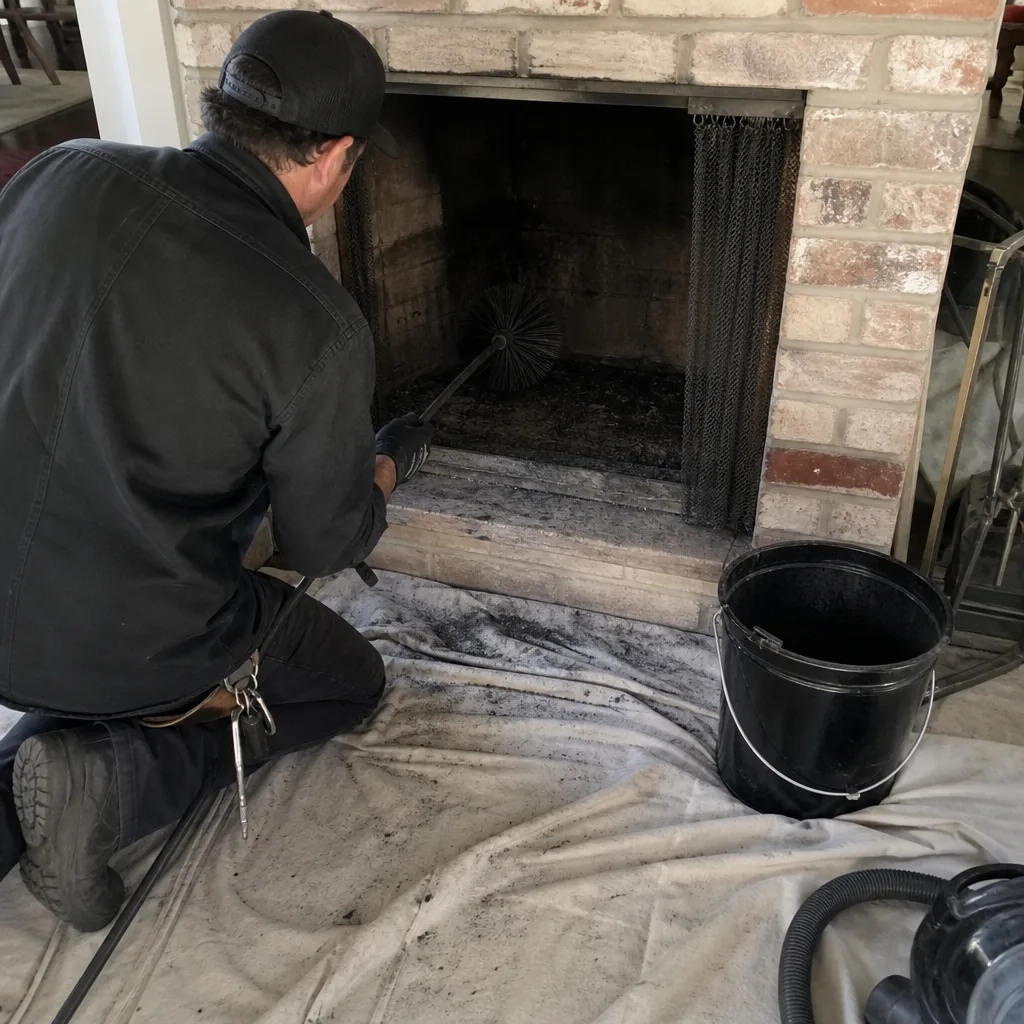
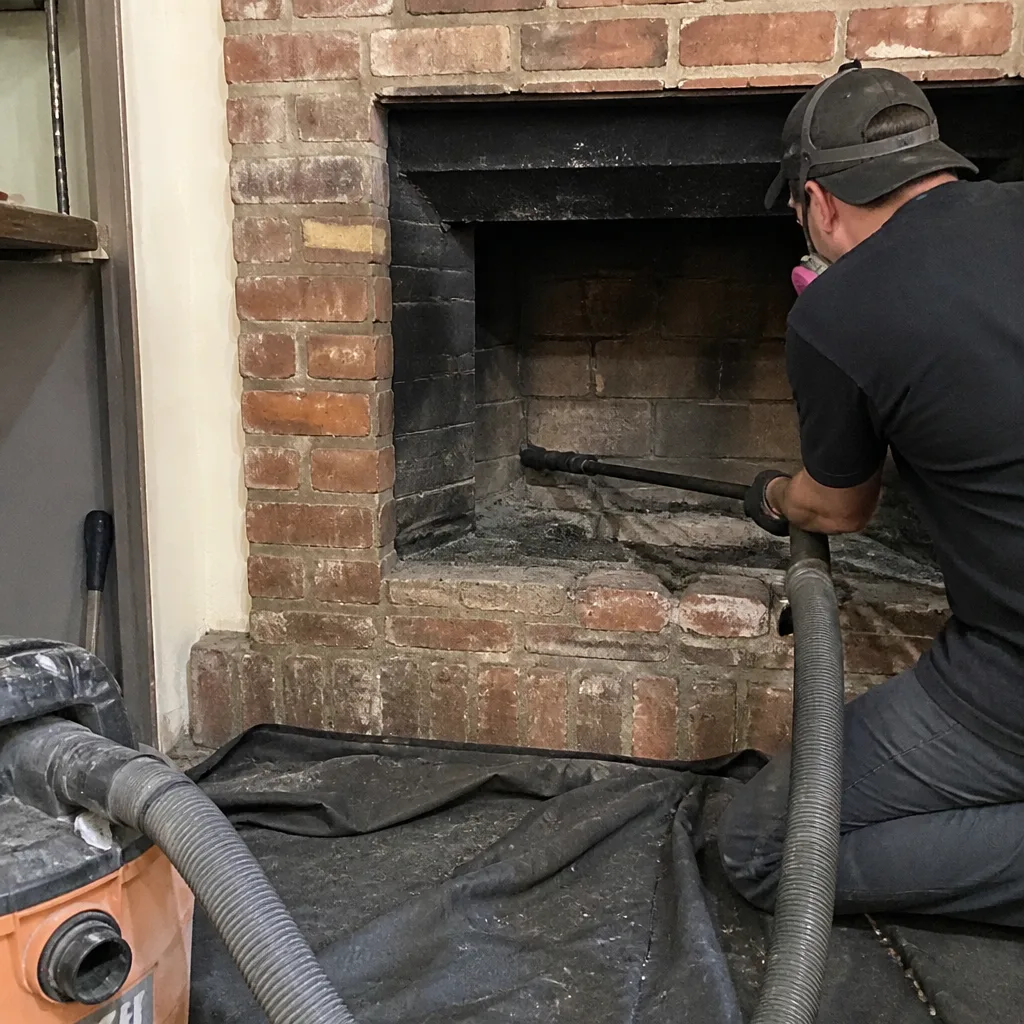
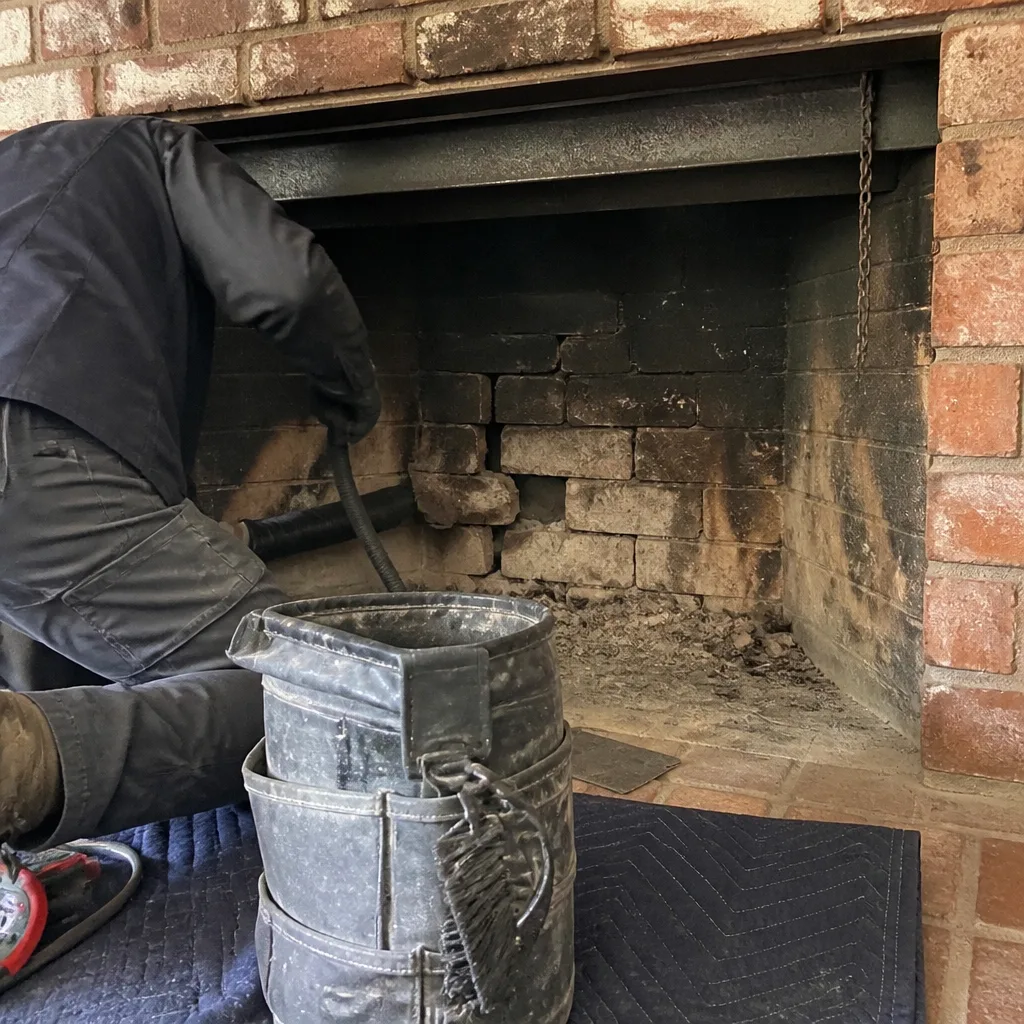
Level 1 sweep and inspection to the NFPA 211 annual standard - flue, crown, cap, and flashing checked and photographed
Chimney sweep logs do not sweep chimneys. They loosen some creosote - which then falls where a brush and vacuum still have to collect it.
Chimney Sweep Troubleshooting in Roseville: Common Problems and How to Fix Them
If smoke is backing into your living room, the instinct is to blame the damper. In the Sacramento Valley, the real culprit is more often a pressure imbalance caused by tightly sealed modern construction. A house built to hold heat also holds air, and a chimney needs to pull air from somewhere to push smoke up and out. When it can’t, smoke finds the path of least resistance, which is your living room. The diagnosis changes the fix entirely, and that’s the point of this guide. Most of what homeowners try to troubleshoot online is a symptom of one upstream cause. We’ll show you how to read what your chimney is telling you, which symptoms mean stop burning now, and which can safely wait for a scheduled visit.
Quick Answer
Most chimney problems in Roseville come down to one of five root causes: creosote buildup restricting draft, a pressure imbalance from a tightly sealed home, a cracked or spalling flue liner, a damper that no longer seats, or water intrusion from our dry-then-wet seasonal swing. If smoke backs into the room only when the house is closed up and running exhaust fans, suspect pressure before you suspect the damper. If you see white powder, flaking tile, or rust streaks, suspect water. And if you smell a sharp, acrid odor or see soot falling inside the firebox, stop using the fireplace until a professional inspects it.
Styles & brands we work with
- Sweep & inspection
- Caps & crowns
- Flue relining
- Masonry repair
- Gas fireplace service
Table of Contents
- How to Read Your Chimney’s Symptoms Before You Call
- Draft Problems: Creosote vs. Structural vs. Pressure
- The Pressure Imbalance in Roseville’s Tightly Sealed Homes
- How Roseville’s Dry Summers and Wet Winters Affect Your Liner
- Symptoms That Mean Stop Burning Immediately
- Symptoms That Are Safe to Monitor
- What to Photograph Before the Sweep Arrives
- How Repairs Actually Work: Resurfacing vs. Relining
How to Read Your Chimney’s Symptoms Before You Call
A chimney doesn’t fail silently. It gives you clues for months, sometimes years, before something serious happens. The trouble is those clues look almost identical from the living room. A weak draft looks the same whether it’s caused by a half-inch of glazed creosote, a cracked liner, or a sealed house starving for combustion air. Homeowners who learn to read the difference speed up diagnosis and avoid paying for a fix that doesn’t address the root cause.
Here’s what we’ve learned from inspecting chimneys across Roseville: the fireplace is a system, and symptoms cluster by cause. Before you book a visit, walk the room and the firebox and note what you see.
- Smoke pattern: Does smoke roll out steadily the whole burn, or only when you first light it? Steady roll usually points to a draft restriction or pressure problem. A puff at startup that clears is often just a cold flue.
- Where the staining is: Soot above the firebox opening means the smoke is spilling before it turns up the flue. Soot inside the flue only, with a clean firebox, usually means the chimney is drafting fine but something downstream is narrow.
- Odor timing: A sharp smell when the fireplace is off, especially on warm days, often means creosote is absorbing moisture and off-gassing. A smell only during a burn points to a draft issue.
- White powder: Efflorescence, that chalky white staining on brick, means moisture is moving through the masonry and leaving mineral deposits behind. That’s a water problem, not a smoke problem.
- Flaking tile or rusted metal: This is liner damage, and it changes the priority of the visit.
None of these observations replace a professional inspection. But they turn a vague complaint (“it smokes”) into a starting point the technician can verify against. If you’re still in the research phase, our Roseville service overview is a good place to see what a full visit covers. A chimney inspection isn’t a formality; it’s a fire-safety checkpoint that tells you what’s actually happening inside the flue.
Draft Problems: Creosote vs. Structural vs. Pressure
Three very different problems produce the same complaint: “my fireplace smokes.” Distinguishing them matters because they require completely different fixes, and fixing the wrong one wastes money.
- Creosote draft problem. Combustion byproducts condense on the flue walls and harden. A thin coat is normal. A thick, glazed, tar-like layer narrows the pipe and the smoke can’t get past it. The tell is that the fireplace worked fine for years and started smoking gradually. The fix is a professional sweep, and if the glaze is hardened, a chemical treatment may be needed before cleaning.
- Structural draft problem. The flue itself has failed. A cracked liner, a broken flue tile, a chimney that’s too short for the house, or a missing rain cap all break the draft. The tell is often a smoke roll that doesn’t improve even after a fresh sweep, or smoke that comes back down on certain wind directions. The fix is repair or relining, not cleaning.
- Pressure problem. The chimney is fine. The house is the issue. Modern construction seals air movement so tightly that when kitchen or bath exhaust fans run, the chimney is the easiest path for replacement air. The tell is that the fireplace smokes when the house is closed up, when appliances are running, or in the shoulder seasons. The fix is usually adjusting the air supply, not touching the chimney.
Here’s what makes this tricky: from inside the living room, all three look the same. Smoke is coming out where smoke shouldn’t be. That’s why guessing at the fix before a technician actually inspects the flue is so common, and it’s how a small $200 draft issue turns into a conversation about a $3,000 reline that was never necessary. If you suspect structural damage, our chimney repair page walks through what a repair visit actually looks like.
The Pressure Imbalance in Roseville’s Tightly Sealed Homes
Roseville has grown quickly with newer tract homes and energy-efficient construction, and that construction is designed to hold conditioned air inside. From an energy standpoint, that’s the goal. From a chimney standpoint, it creates a problem. A fire needs to draw air from the room to burn, and the chimney needs that air to move up and out. In a well-sealed house, that air has to come from somewhere, and if no window is cracked and no make-up air is provided, the chimney competes with every exhaust appliance in the home.
The classic symptoms of a pressure-related draft failure:
- Smoke rolls when the kitchen hood, bathroom fan, or dryer is running.
- The fireplace works on a mild day but smokes in cooler weather when the heat is running.
- Smoke backs up into the room only in the shoulder seasons, when the house is sealed but not yet calling for heat.
- You can feel air being pulled toward an open door or a fan when you stand near the fireplace.
These are all consistent with a chimney that can’t overcome negative indoor pressure. The fix usually starts with something simple: opening a nearby window on a cold start, installing a make-up air duct, or adjusting the exhaust strategy. Sometimes the fix is a chimney height extension to improve draft. What you should not do is accept a liner replacement as the answer when the symptom is pressure. If you’re seeing these patterns, ask the technician directly whether pressure has been ruled out. On our Chimney Sweep Roseville page, we walk through how the initial evaluation orders these checks, because the sequence matters.
How Roseville’s Dry Summers and Wet Winters Affect Your Liner
Roseville has two distinct seasonal personalities. Summers are hot and dry. Winters are wet, but gentle. That combination is harder on a masonry chimney than either extreme alone, and it’s a pattern most chimney guides written for cold-climate homeowners don’t address.
In summer, the masonry bakes. The brick and mortar pores open, moisture that got in during the winter evaporates out, and the surface layers can develop hairline cracks under the thermal cycling. In winter, rain hits that same masonry. Water soaks in through those summer cracks, through a failing crown, or through a missing or leaky chimney cap. Then the wet winter air sits against the flue. When the flue liner is tile, moisture in the tile joints causes the tile to crack and spall. When the flue has been relined in stainless, moisture runs down the metal and rusts the joints and the cap.
The two symptoms that most often come out of this dry-wet pattern:
- Liner condensation. A cool flue with a warm, moist interior, especially during a wood burn after a rain, condenses acidic moisture on the liner’s interior. Over time, that eats tile mortar joints and metal seams. The tell is a chalky or rusty streak inside the flue, or a creosote layer that smells sour.
- Spalling. That’s when the face of a brick or the surface of a flue tile flakes off. It’s a direct result of trapped moisture working the surface loose. Spalling flakes often look like fired clay chips and can show up on the firebox floor or the roof.
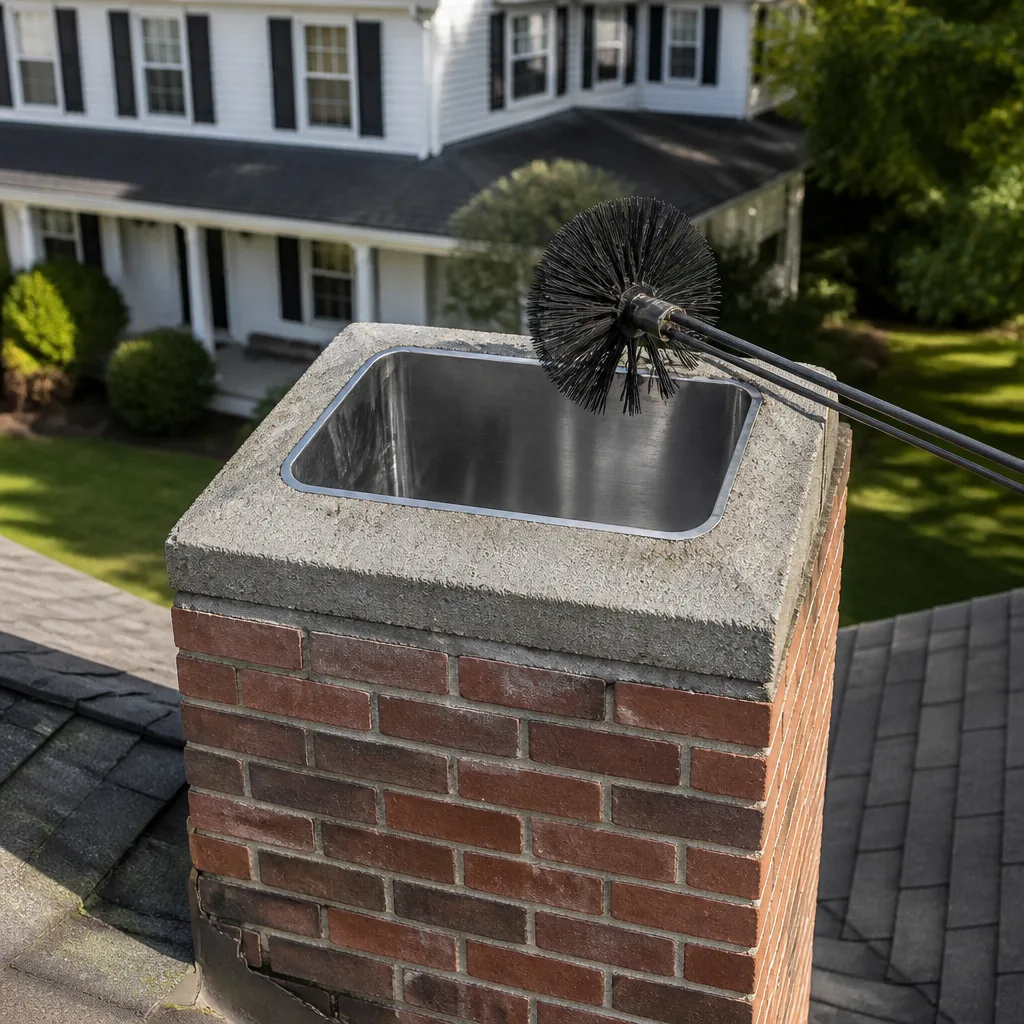
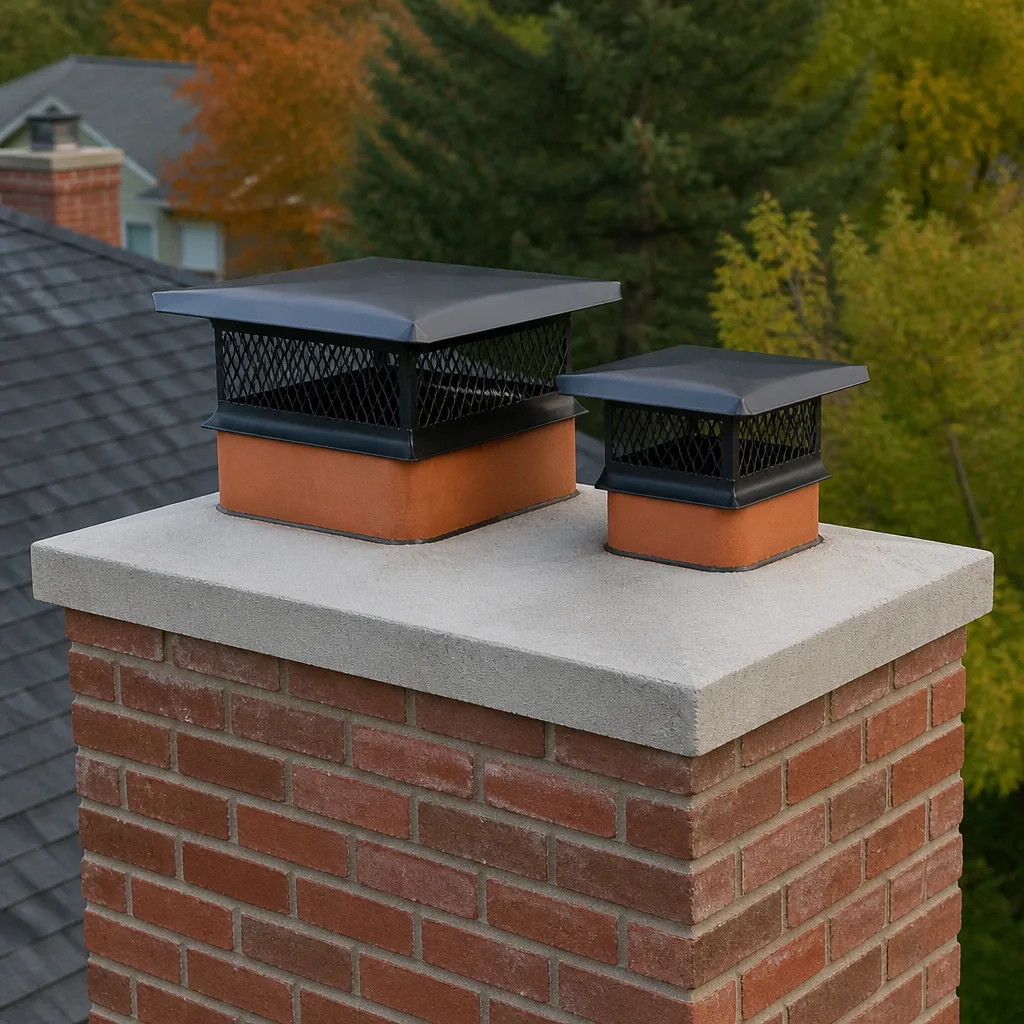
A chimney cap and a sound crown are the two cheapest defenses against this pattern. If yours is missing or cracked, that’s a repair worth prioritizing before the next wet season. For the cleaning side, our chimney sweep page covers what a proper sweep removes and why timing around the seasons matters.
Symptoms That Mean Stop Burning Immediately
Some symptoms are safe to note on a list. Others mean the fireplace should not be lit again until it’s been inspected. We don’t say that to scare anyone. Chimney fires are real, and carbon monoxide is odorless, so the only safe move is to stop until a professional can look.
Stop burning and call for an inspection if you see any of these:
- A thick, glazed, shiny layer inside the firebox or at the top of the flue opening. That’s stage-three creosote, the most flammable grade. It can ignite from a hot ember.
- Visible cracks or gaps in the flue tile when you look up with a flashlight. That’s a path for heat and combustion gases to reach the structure.
- Flaking or crumbling material falling into the firebox. Liner damage is underway.
- A yellow or orange flame that floats and pops instead of burning steady and blue at the base. That can indicate incomplete combustion and elevated carbon monoxide.
- Headaches, dizziness, or drowsiness that you notice in the room with the fireplace but not elsewhere in the house. Treat that as a possible carbon monoxide warning and ventilate the space and step outside.
- The smell of smoke in the house when the fireplace is off and the damper is closed. That suggests gases are finding a way around a failed component.
If you’re seeing any of these, call us at (833) 946-0150. We answer 24/7. Fast dispatch from 7am to 7pm, Sunday through Friday. The evaluation will photograph what we find so you can see it for yourself, and nothing gets recommended without evidence you can review.
Symptoms That Are Safe to Monitor
Not every oddity is urgent. Some are worth logging and bringing to the next scheduled inspection rather than booking an immediate visit. Knowing the difference keeps you from spending on unnecessary trips and it also means the things that do matter aren’t buried in noise.
These can usually be monitored until your next scheduled inspection:
- A puff of smoke at cold start that clears in a minute or two. That’s the flue warming up. It’s normal and it eases as the flue heats.
- A light, powdery soot layer inside the firebox. Normal soot accumulation, not a structural issue.
- A faint smoky smell in the room after a fire on a humid day. Usually creosote odor off-gassing. Worth noting, worth cleaning before the season, but not a stop-burning signal.
- A creosote buildup that’s still in the fluffy or brittle stage. Schedule the sweep and don’t burn until it’s addressed. It’s not an emergency if you stop burning now.
- Light staining above the firebox opening that hasn’t gotten worse over a season. Note the date and check it again in a few months. If it grows, that changes the priority.
Monitoring means actually monitoring. Take a photo now, mark the date, and compare after a season. If the symptom has grown or shifted, it’s no longer in the monitor category. Our team can help you decide, and estimates are free.
What to Photograph Before the Sweep Arrives
Homeowners can do a lot of the diagnostic legwork safely before a technician arrives. You’re not disassembling anything. You’re taking photographs from the room. A clear set of images often lets the technician show up with the right tools and the right expectations, which is faster and more accurate than starting from scratch on site.
- Photograph the smoke pattern. With the fireplace lit, take a photo from the middle of the room showing where smoke is exiting relative to the mantle. Repeat with the kitchen hood on, if you have one, and with a bathroom fan running.
- Photograph the firebox interior with a flashlight. Show the back wall, the side walls, and the throat above the damper. Don’t reach inside. Just photograph from the opening.
- Photograph the flue from inside, if you can angle a phone camera up past the damper. Don’t climb anything. If you can’t get a clean shot, skip it.
- Photograph the damper seating. Open and close it a couple of times and note whether it seats fully flush or hangs at an angle. Photograph the closed position.
- Photograph any efflorescence or staining on the exterior. The location of the white powder matters. Note whether it’s near the top of the chimney, along the sides, or around the base.
- Photograph the chimney cap and crown from the ground. Zoom in. If the crown is cracked or the cap is missing, that’s a quick, cheap fix to prioritize.
Include a short note with each photo: the date, the weather that day, whether the heat was running, and whether any exhaust fans were on. These details turn a folder of photos into a diagnostic record before the technician even walks in. If a professional ever tells you that you need a new liner, you should be able to look at the photos together and see why. That’s the standard we hold ourselves to.
How Repairs Actually Work: Resurfacing vs. Relining
When a flue is damaged, there are two repair paths and they’re often confused. Understanding the difference helps you ask the right questions and recognize when someone is quoting the wrong fix.
Ceramic flue resurfacing. When the flue tile has cracked joints or a pitted surface but the structure is intact, the flue can often be resurfaced rather than relined. HeatShield is the ceramic resurfacing system used for this. A specialist spreads a ceramic compound on the inside of the flue and it cures into a smooth, sealed surface. The original tile is preserved. This is a solution most general contractors don’t carry or know how to apply, and it’s often the right answer when the alternative would be a full liner. Aluminum and other metal components from a maker like Olympia Chimney are often part of the surrounding assembly when a top plate or cap is also being replaced.
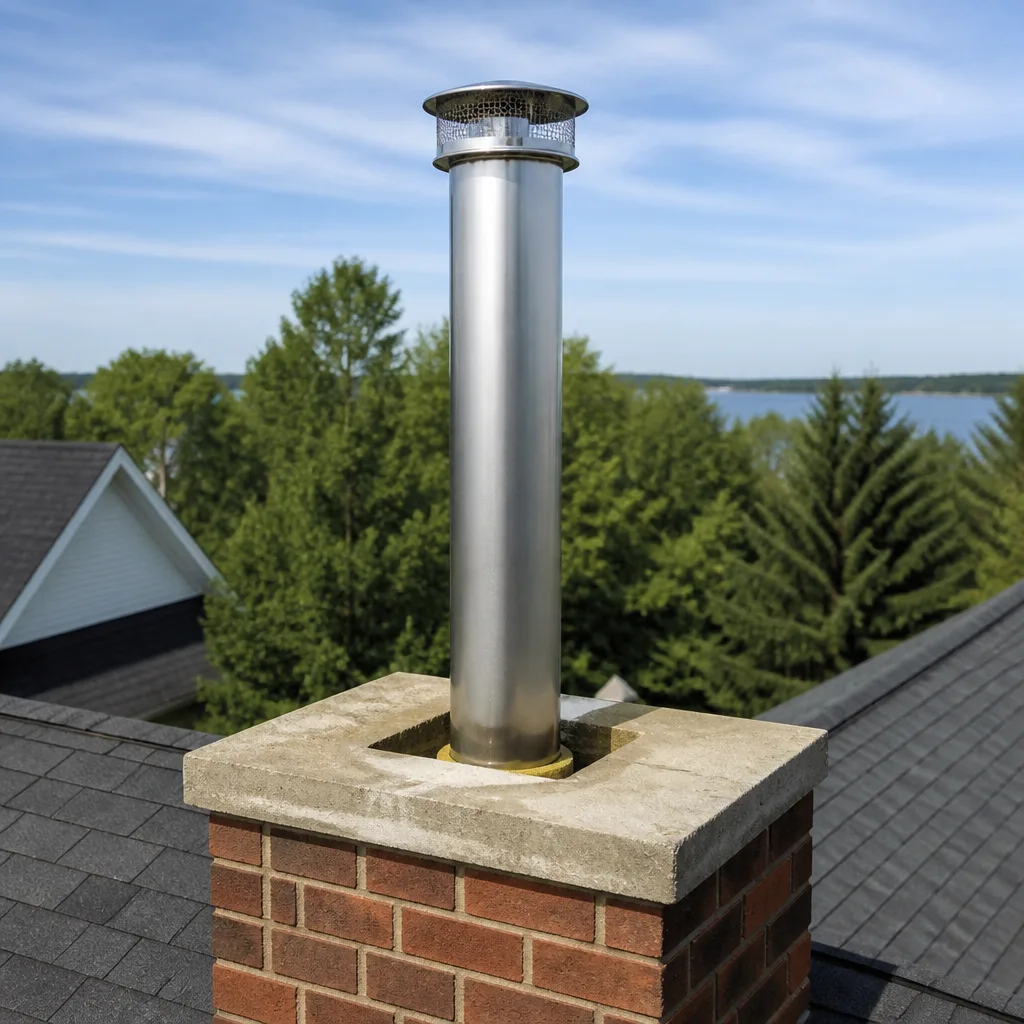
Flexible relining. When the original flue is beyond resurfacing, a new liner is installed inside the existing chimney. DuraFlex flexible liner systems are specified by name for this, because the flue has to flex around offsets and still meet code. A proper reline is not a shortcut; it’s a purpose-built stainless system sized to the appliance. Understanding which path is appropriate depends on what’s actually inside the flue, and that’s a camera-inspection call.
Some surrounding components need to be right either way. Famco caps and termination hardware are the kind of thing we check when we’re up there, because a weather-tight top is what protects the repair below. A reline without a sound cap leaks and fails early. Resurfacing without addressing a cracked crown has the same problem.
Here’s the honest part: sometimes the correct answer is that nothing structural needs doing. The flue is sound, the draft is fine, and the symptom was pressure or creosote. In those cases we say so, and we say plainly when a repair can safely wait. That’s not a sales tactic. It’s how a fire-safety conversation should go.
Common Mistakes to Avoid
- Blaming the damper first. A damper that doesn’t seat fully does cause smoke, but it’s less common than a pressure or creosote problem. Have the damper tested by a technician before you pay to replace it.
- Burning through a smoking problem to “see if it clears.” If smoke is backing into the room, the combustion gases are backing up with it. Stop and get it checked rather than pushing through.
- Treating a fresh sweep as proof the chimney is sound. A clean flue says nothing about the liner, crown, or cap. Those need a separate inspection.
- Accepting a liner quote without camera evidence. In Roseville, and everywhere, you should be shown the camera photos of what’s inside the flue before a reline is recommended. No evidence, no decision.
- Assuming a general handyman can diagnose this. A jack-of-all-trades may clean a firebox, but reading a flue for spalling, pressure, and creosote grades is a specialty. Chimney work is all we do.
- Skipping the cap to save a little on the repair. An uncapped flue in our wet winters is exactly how the next problem starts. The cap is part of the job, not an upgrade.
- Ignoring the smell in the off-season. A persistent sour smell in summer is often creosote absorbing moisture and signaling that a cleaning is due. It’s easy to dismiss and it becomes a real problem if it sits.
See the difference
 Before
 After
 Before
 After
 Before
 After
When to Call a Professional
Call a professional when any of the stop-burning symptoms show up, when you see cracks or flaking in the flue lining, when smoke backs into the room consistently, or when you’re being told a liner or major repair is needed and you haven’t seen camera evidence of it. Also call before the first burn of the season if you can’t remember when the chimney was last swept. Our technicians have up to 9 years of experience, and we can work with your insurer when a repair is part of a claim. Chimney Sweep Roseville offers free estimates in Roseville. Call (833) 946-0150 to schedule.
Frequently Asked Questions
Most wood-burning chimneys should be swept once a year, or more often if creosote builds faster than that. The safest guide is to have the flue inspected before each heating season and swept when the creosote reaches a thickness where it’s no longer safe. Gas inserts need less frequent cleaning but still need an annual inspection for the liner and cap. Call (833) 946-0150 for an exact assessment and estimates are free.
That pattern almost always points to a pressure imbalance, not a chimney failure. In a tightly sealed home, exhaust fans and the heating system pull air out faster than the chimney can draw replacement air in, so smoke finds the easiest path. Opening a nearby window on a cold start often confirms it in seconds. Our team can evaluate whether the fix is a pressure adjustment, a chimney height extension, or a liner repair. Call (833) 946-0150.
You can’t reliably tell them apart from inside the living room, and that’s exactly why a camera inspection matters. Creosote narrows the flue and produces a smoky, gradual decline in draft. A cracked liner produces a similar symptom but can also let hot gases into the structure. Both can look like “the fireplace smokes.” Only an inspection with a camera can distinguish them, and the fix for each is completely different. Estimates are free, and you’ll see the camera footage.
The white powder is efflorescence, and it means moisture is moving through the masonry. It’s not a fire hazard by itself, but it’s a signal that water is entering, often through a cracked crown or a missing cap. Left alone, that moisture causes spalling and liner damage over our wet winters. Have it evaluated before it gets worse. Call (833) 946-0150 for a free estimate on the inspection and any repair.
Yes, a cap is standard protection. It keeps rain out of the flue, blocks birds and debris, and it reduces the water intrusion that drives efflorescence and liner damage in our dry-then-wet seasonal cycle. A missing or damaged cap is a small repair that prevents a much larger one. Our team uses Famco and similar professional components for the termination hardware. Call (833) 946-0150 to book an inspection.
We’ll ask about the symptoms you’re seeing, schedule a visit, and inspect the flue with a camera. You’ll see the photographs before anything is recommended. The written estimate sets the final price. Nothing is pushed that you can’t verify, and we’ll tell you when a repair can safely wait. We answer 24/7. Fast dispatch from 7am to 7pm, Sunday through Friday. Call (833) 946-0150.
The Bottom Line
The chimney problems homeowners try to fix in the moment are usually the visible end of a longer chain. Smoke in the room could be creosote, a failed liner, or a sealed house fighting its own exhaust fans. Reading the pattern before you act is what separates a small repair from an expensive one. Watch the timing of the smoke, the location of the staining, and the presence of white powder. Photograph what you can from the room and note the weather and the appliances. Stop burning when the signals point to liner damage or creosote ignition, and monitor what’s benign. When in doubt, get the flue inspected with a camera and ask to see the evidence. A chimney that’s inspected, cleaned, and repaired by the same company is a chimney you can trust. Estimates are free.
Call (833) 946-0150 for a free estimate. We answer 24/7. Fast dispatch from 7am to 7pm, Sunday through Friday.
Written by the team at Chimney Sweep Roseville.